What to Check Before Taking Handover of Your Villa: Initial Handover Checklist
 The Fahison Team
Reading time: 7 min
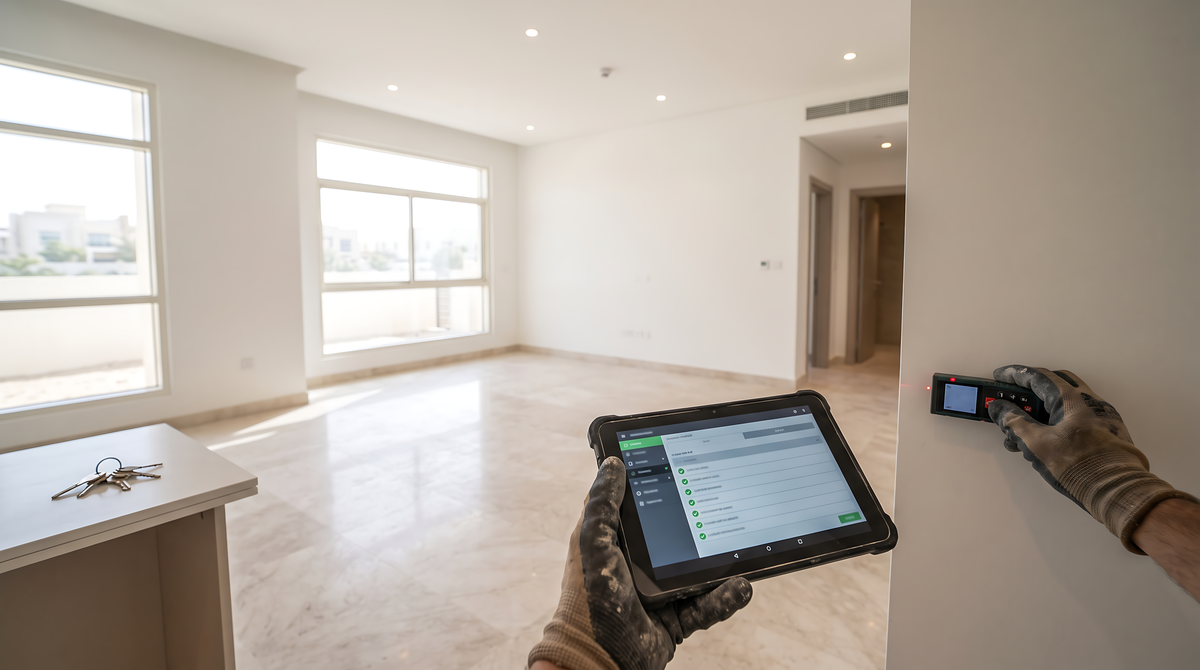
Article Contents
Before you take handover of your villa from the contractor, check 12 key areas: compliance with the drawings, walls and ceilings, floors, electrical, plumbing and drainage, doors and windows, paint, air conditioning, bathrooms and kitchens, roofs and waterproofing, facades, and external areas. Most importantly, turn everything you find into a written snag list that the contractor fixes before you sign the handover, not after.
In this guide we explain when to inspect, what to check in each part of the villa, simple tests you can do yourself, the most common handover mistakes, and when you need an initial handover inspection from the Fahison team.
Why Inspect Your Villa Before Signing the Handover?
Initial handover is the moment when the contractor is still on site and responsible for fixing defects. Once you accept the villa and move in, fixing defects becomes harder and more expensive:
- If you rely on the contractor's word that the work is finished, hidden defects appear after you move in.
- Without a clear list, you can't hold the contractor to specific items.
- You may end up paying for repairs that were the contractor's responsibility.
- Repairs in a furnished, occupied home are much harder than in an empty one.
When to Inspect: Where Initial Handover Fits in the Process
- Work complete: the contractor announces the work is finished.
- Initial handover: you inspect the home and prepare the snag list. This is the time to inspect.
- Repairs: the contractor fixes the snags before handover.
- Move-in and warranty: you move in and the first-year warranty begins.
- Final handover: an inspection before the warranty ends to record what has appeared with use.
What to Check Before Villa Handover: The 12-Area Checklist
These are the areas the Fahison team covers in an initial handover inspection, and you can use them as a checklist for your own walkthrough:
1. Compliance with the drawings
Internal and external dimensions and levels against the approved architectural drawings.
2. Structure and general appearance
Cracks, straightness of walls and corners, and gypsum works.
3. Floors and cladding
Levelness and hollow tiles, tile and marble quality, and expansion joints.
4. Electrical
Switches and sockets, lighting, earthing, the distribution board and fixtures.
5. Plumbing and drainage
Water pressure and leaks, drainage, and damp.
6. Doors and windows
Installation, locks and hinges, sealing, and aluminium and glazing works.
7. Paint and finishes
Colour consistency, flatness, cracks and putty quality.
8. Air conditioning and ventilation
Cooling performance, placement of outdoor units, and clean vents.
9. Bathrooms and kitchens
Ventilation and extraction, floor falls, silicone, and kitchen cabinets.
10. Roofs and waterproofing
Ponding water, waterproofing and thermal insulation, and AC unit and water tank bases.
11. Facades
External finishes, cracks, and fixing of external windows and doors.
12. External areas
External flooring, boundary wall, landscaping and swimming pool.
Simple Tests You Can Do Yourself
These tests don't replace an engineering inspection, but they reveal the most obvious snags on your first walkthrough:
- Try every switch and socket: go room by room and check that every light works and every socket has power.
- Run the water in every bathroom and kitchen: check the water pressure and whether water drains quickly from showers and basins without pooling.
- Tap the tiles lightly: a hollow sound from some tiles can mean they aren't properly bonded underneath.
- Open and close every door and window: check they move easily and close tightly without rubbing.
- Turn on the AC in every room: and check that each unit cools.
- Look at the walls with side lighting: waves and uneven paint shades show up clearly under side light.
- Go up to the roof: look for ponding water or damp patches around AC and water tank bases.
What the eye can't see, such as leaks, damp inside walls and weak waterproofing, needs specialist equipment such as a thermal camera.
Common Mistakes at Villa Handover
- Signing on the contractor's word: signing the handover without any inspection because the contractor said everything is ready.
- Verbal snags: agreeing repairs verbally instead of a written list with photos and the location of each snag.
- Judging by appearance: judging the home by its paint and lighting, while most costly defects are in plumbing, waterproofing and electrical.
- Leaving repairs until after move-in: accepting a promise to fix things after handover, which makes repairs harder.
- Not checking against the drawings: not confirming that dimensions and levels match the approved architectural drawings.
Who Inspects Your Villa? A Team of 3-4 Engineers and Specialists
Initial handover is one of our most comprehensive inspections, so it isn't carried out by one person. The visit is attended by a Fahison team of 3-4 engineers and specialists, each in their own field:
Civil and finishing engineer
Inspects the accessible structural elements and all interior and exterior finishing works:
- Walls and ceilings
- Floors and cladding
- Paint and gypsum
- Doors and windows
MEP engineers
Inspect the mechanical, electrical and plumbing systems with testing equipment, and confirm they are safe and working properly:
- Plumbing
- Drainage
- Air conditioning and ventilation
- Electrical
After the visit, the team combines each specialist's observations into one report, so you receive one complete list instead of scattered notes.
What Fahison's Initial Handover Inspection Gives You
- A team of 3-4 engineers and specialists on the visit, each in their own field.
- Equipment for measuring flatness and levels, a thermal camera to detect hidden waterproofing issues and leaks, and electrical and plumbing testers.
- Checking the works against the approved drawings.
- A precise snag list, with every observation documented with photos and its location, plus the proposed fix.
- The report within 3-4 days of the visit.
- Prices start from AED 3,499 for villas, in Abu Dhabi and across the UAE.
You'll find every inspection item and its details on the initial handover inspection page.
After Handover, and Before It
- After you move in and before the first-year warranty ends: a final handover inspection to record defects that have appeared with use.
- If your villa is still under construction, it is better to catch defects at the right time through construction stage inspection, before finishes cover them.
- To see what our reports look like: our reports.
Villa Handover Inspection FAQs
Q: When should I book an initial handover inspection?
A: After the contractor announces the work is finished, and before you sign the handover and move in.
Q: Who attends the inspection?
A: A Fahison team of 3-4 engineers and specialists: a civil and finishing engineer to inspect the accessible structural elements and finishes, and MEP engineers to inspect plumbing, drainage, air conditioning and electrical.
Q: What is the difference between initial and final handover?
A: Initial handover happens before you move in, so the contractor fixes the snags before handover. Final handover happens after you move in and before the first-year warranty ends, to record defects that have appeared with use.
Q: Why does the initial handover inspection cost more than other inspections?
A: Because it is our most comprehensive and longest inspection. We inspect the whole villa inside and out with a team of 3-4 engineers and specialists, each in their own field, then prepare a detailed report with every observation documented with photos and proposed fixes. That takes more time both on site and in preparing the report.
Q: What does the report include?
A: Every observation documented with photos and its location, with the proposed fix, in a clear list you can hand to the contractor.
Q: When will I receive the report?
A: Within 3-4 days of the visit.
Q: How much does an initial handover inspection cost?
A: Prices start from AED 3,499 for villas. Contact us with your home's details and we'll confirm the price.
Book Your Handover Inspection Before You Sign
Has your contractor announced the work is finished? Don't sign the handover until we've inspected. Book an initial handover inspection on WhatsApp, or see the initial handover inspection details.
Related Articles
-
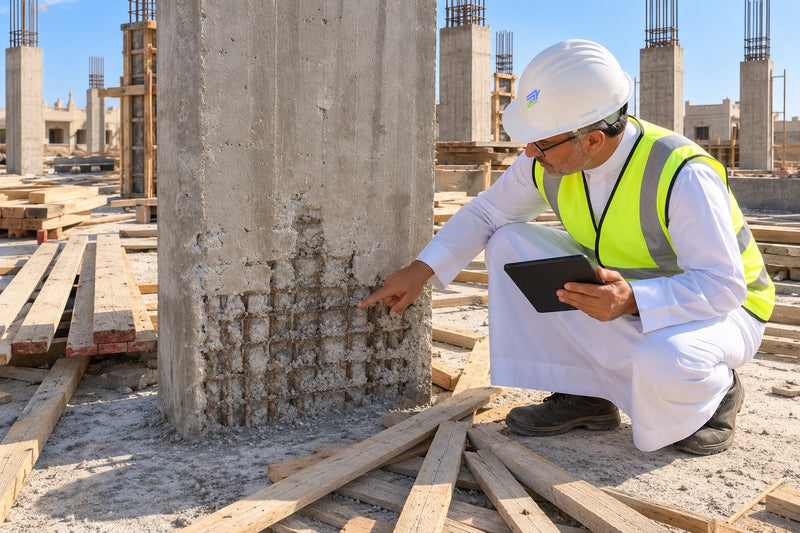
Honeycombing and Spalling in Concrete: the Difference, the Causes, and When They Are Serious
The difference between honeycombing and spalling in your villa's concrete, the causes of each, the signs, when it is serious, and how to catch it in time.
Read Article -

Taking Handover of Your Apartment or Villa From the Developer: The Snag List Before You Sign
A snag list guide for taking handover of an apartment or villa from the developer: 9 areas to check, tips before handover day, common mistakes, and when to book a snagging inspection.
Read Article -

Defects That Appear After Moving Into a New Villa: What to Do Before the Warranty Ends
The 8 most common defects that appear after moving into a new villa, why they appear, how to monitor your home in the first year, and when to book a final handover...
Read Article

